The Fishermen's Stories
The Fishermen's Stories
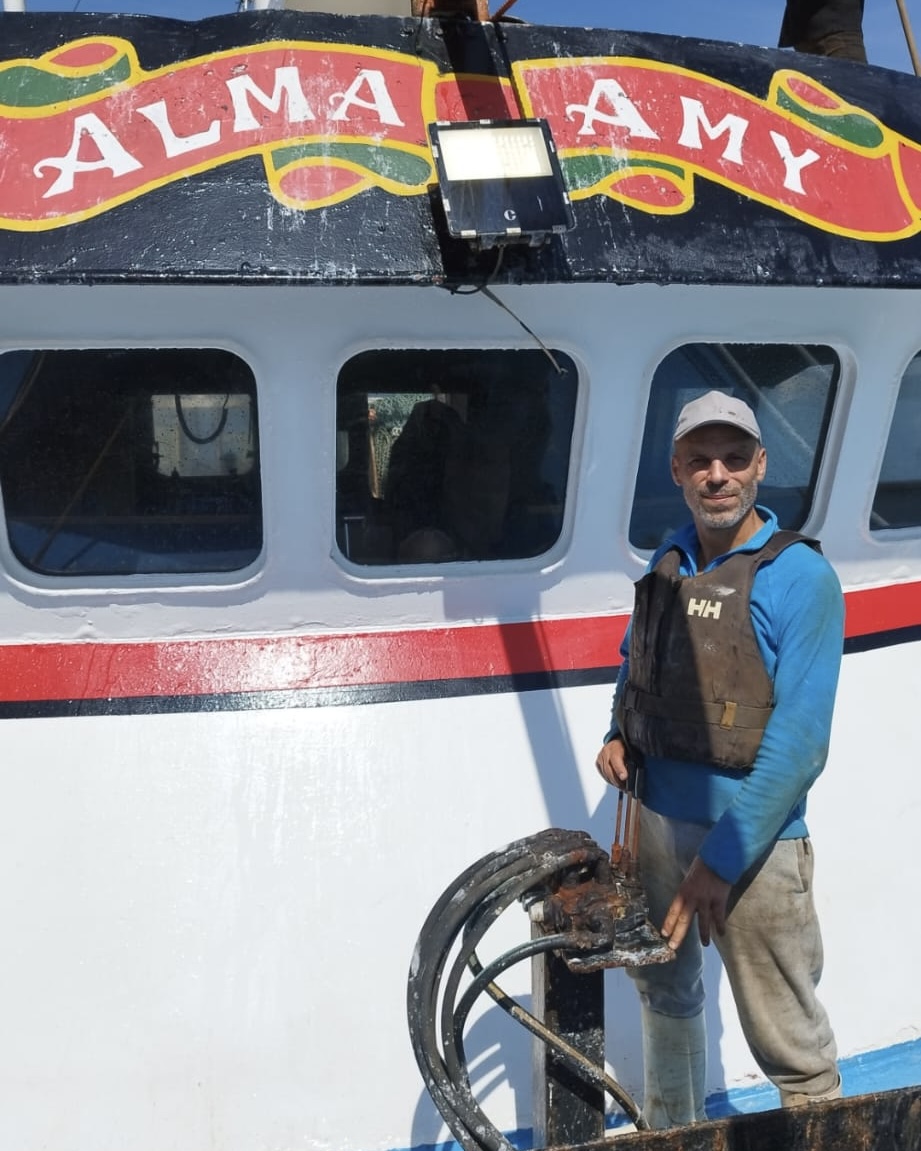
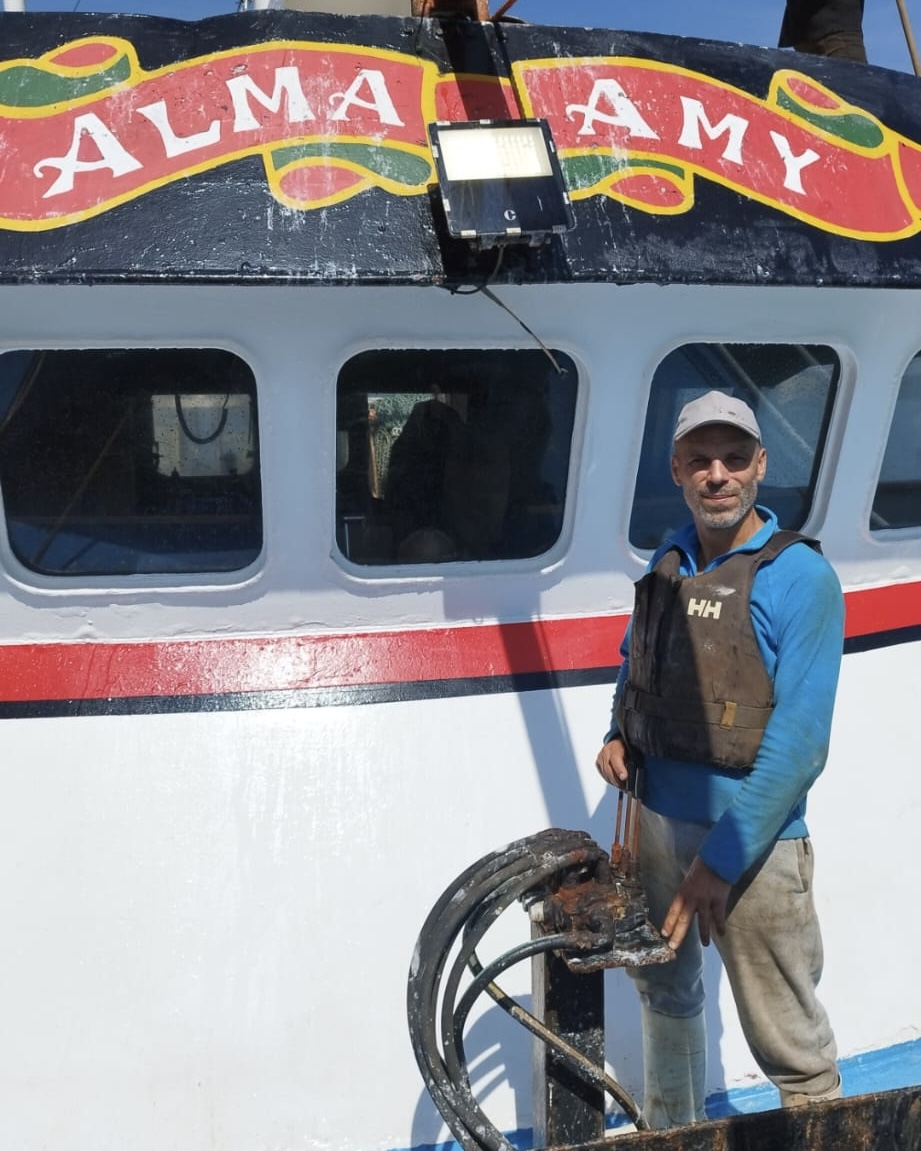
Vasile Goreacii, a determined Moldovan, has shown that a radical career change is possible at any age if you have the right guidance and perseverance. From working on land in construction and mechanics, he became a sailor on the shrimp trawler "ALMA AMY" in Ireland. This is his story.
Interview with Vasile Goreacii
PART I. Introduction and Life Before the Sea
1. To start, introduce yourself. Who is Vasile Goreacii and what were you doing before entering the maritime industry?
My name is Vasile Goreacii. Before entering the maritime industry, I worked for 8 years in Moscow as an auto mechanic. After that, I worked for 7 years in France in the construction field.
2. What was your life like before entering the fishing industry? What plans did you have then?
Before entering the maritime industry, my life was going normally. Financially, things were going quite well, and I didn't feel a significant lack.
However, since childhood, I liked fishing and was attracted to ships. I imagined that life at sea was easy and very romantic.
3. Where did the idea of trying a career at sea come from?
The idea of entering the maritime industry came from watching videos on TikTok. I saw posts by Alexei Matcovschii, where he talked about life and earnings at sea.
I became curious, started researching the necessary documents, and decided to give it a try myself.
4. What motivated you to go to sea?
I was motivated by curiosity, but also by the fact that, since childhood, I loved fishing and everything related to ships.
I wanted to try this experience and see if working at sea was suitable for me.
5. How did you actually start the hiring process?
By following Alexei Matcovschii's posts, I found out what documents I needed. I completed the Basic Safety Training course and obtained the maritime medical certificate.
After that, I started studying English intensively, as I didn't know it at all. In school, I had studied French.
After the consultation I had with Alexei in Chișinău, I went home, studied English for a few more weeks, and started looking for jobs on all social networks, as he recommended.
I found an ad urgently needing a fisherman, found the phone number, and called personally.
6. What maritime documents did you need?
I needed:
European passport
Basic Safety Training certificate
Maritime medical certificate
Besides the documents, I understood that I also needed to study English to be able to communicate directly with employers and crew members.
PART II. Employment in Ireland
1. How did you get the job on the shrimp trawler "ALMA AMY"? Tell us the whole process.
I found an ad on social networks urgently needing a fisherman. I found the phone number and called myself.
I talked to the employer for about two minutes. I understood him about 50%, and he understood me about 50%. He told me to send my CV.
I sent my CV and waited for a response. In about two hours, he told me I was accepted and asked if I could come.
The discussion took place on Friday, and he asked me to be on the ship by Sunday evening. I accepted and told him I would definitely arrive.
2. How did you react when you received confirmation that you were accepted?
I had a lot of emotions and feelings. I didn't know how it would be, where I would end up, and what awaited me.
However, I didn't back down. I decided to move forward.
3. What were your first impressions when you boarded for the first time?
I arrived in Ireland, and the ship's owner ordered a taxi that took me directly on board.
When I boarded the ship for the first time, I started laughing and said:
"Wow, it moves so much!"
It was the first time I truly felt the movement of a ship.
4. How did the crew welcome you, and how did the adaptation period go?
The crew consisted of two Egyptian citizens and two Lithuanian citizens.
Among them, only one of the Egyptian colleagues knew English a little better than me. Two other colleagues spoke almost no English, and with one of them, I was at about the same level.
The team was very friendly. From the beginning, they showed me the entire ship and explained how the work was done.
PART III. Life and Work at Sea
1. Tell us what a typical day looks like on a shrimp trawler.
Work started around 5:00 AM. We would cast two trawls into the water, and they were towed for about 5 hours.
Around 10:00 AM, we would haul the trawls and start sorting the shrimp, selecting and cleaning the fish. After finishing, we would cast the trawls back into the water.
After another 5 hours, we would haul them again and continue sorting. During this time, we managed to have a coffee or a meal.
If we couldn't finish all the tasks, while the trawls were in the water, we would prepare food together with the captain.
In total, we hauled the trawls three times a day. The last haul was around 10:00 PM. Sorting and processing the catch could continue until 5:00, 6:00, or even 7:00 in the morning.
We were few people and had a lot of work because the fishing was going very well.
This process repeated every day. We stayed at sea for about 6 days, then returned to port.
2. What are your main responsibilities on the ship?
My responsibilities were similar to those of the other crew members.
We all participated in casting the trawls, hauling them, removing the fish and shrimp, sorting the catch, and preparing the trawls for the next launch.
There wasn't a single task that only one person would do. We all worked as a team, and everyone did what they could and what was necessary at that moment.
3. What was the hardest part in the first days at sea?
I can't say I noticed anything extremely difficult.
From time to time, I missed home, the kids, and the family. Also, I slept quite little, which was one of the more challenging things.
Otherwise, everything went well.
4. What surprised you the most about life and work on a fishing vessel?
I was pleasantly surprised that I didn't get seasick.
Before leaving, I thought I would get sick, but I handled the ship's movement very well. I didn't imagine I would feel so good at sea.
5. How are the living conditions on board: cabins, food, schedule, and the relationship between crew members?
The living conditions were very good.
There were two cabins on the ship, each with four berths, similar to train compartments. We were three people in one cabin, and the other two guys stayed in the other cabin.
We prepared the food together, including with the captain, during the times when the trawls were in the water, and we had a little free time.
The schedule was very intense, and we slept little, but the relationships between the crew members were very good.
I can say in one word that we felt like a family. Without a good relationship between crew members, you can't work efficiently because discomfort arises, and no one can work normally.
PART IV. The Incident at Sea
1. I know the ship you were working on was involved in a collision with another vessel. What exactly happened?
The incident occurred at night.
I was on duty between 2:00 and 3:00 AM. After me, a colleague from Lithuania, aged 63, took over. He was an experienced man and had worked in crab fishing.
The captain had told us to watch the radar and, if a point representing another ship appeared, to call him immediately and not make any maneuvers on our own.
After I handed over the post to my colleague, I went to sleep. From what I understood, he noticed a situation on the radar and tried to make a maneuver.
I woke up because of the impact. All the crew members immediately got up, and the captain woke up too.
2. How did the crew react at that moment, and what did you feel?
After the impact, we all got up and went to see what had happened.
The captain started talking to the person who had been on duty to find out why he wasn't called in time.
We immediately began checking the ship's hull. In the hit area, there were ropes, nets, and other trawl equipment. We moved everything from that area and noticed a hole had formed in the ship's hull.
At that moment, it was a tense and unusual situation for the entire crew.
3. How was the situation managed, and what did you learn from this experience about safety at sea?
After we cleared the area and saw how big the hole was, the captain came, assessed the situation, and decided to return to port.
We sailed very slowly. Throughout the journey, one of us checked the damaged area to see if water was entering and if everything was okay.
The captain constantly came and asked if the situation was stable and if anyone was injured. Fortunately, everything was fine, and we arrived safely in port.
After arrival, representatives from the maritime authority came. They recorded the incident and spoke separately with each crew member to find out how everything happened.
The ship remained in port for inspections, insurance, and repairs.
From this incident, I drew a very important conclusion: wherever you are and wherever you work, you must be very responsible.
At sea, it's about your life, the life of the entire crew, and the lives of people on nearby ships. You must always be attentive and responsible.
PART V. Personal Experience
1. How has this experience changed you as a person?
After this experience, I realized that this is the work I've been searching for all my life.
I no longer want to do any other work. I've fallen so much in love with the sea and the whole process that it's hard to describe in words.
This is what I've dreamed of.
2. What have you learned about discipline, responsibility, and teamwork?
I can't say these things were completely new to me.
When I worked on construction sites in Paris, I worked with other people and already understood what responsibility and teamwork meant.
The experience at sea confirmed to me how important discipline, responsibility, and collaboration among crew members are.
3. What has been the most beautiful moment you've experienced at sea so far?
I can't choose just one moment.
For me, all the moments spent at sea have been beautiful. Even when I had a little free time, I enjoyed every moment.
4. But the most difficult moment?
The most difficult was the incident that resulted in the hole in the ship's hull.
When I first looked at the hole, for a moment, I thought we would end up directly in the water, alongside the shrimp.
That was the most difficult moment. Otherwise, I haven't had any particularly hard situations.
PART VI. Earnings and Motivation
1. How do the earnings at sea compare to those on land?
Earnings on land cannot be compared to those at sea because the difference is very large.
What you can earn on land in almost a month, you can earn at sea in about six days of work.
2. How are salaries or earnings divided on the ship?
In the initial response, I didn't explain the exact formula by which earnings are divided among crew members.
I can only say that earnings at sea are considerably higher than those I obtained working on land.
3. What motivates you to continue in this industry?
I am motivated by the fact that this work gives me a lot of pleasure.
I love the sea, I love the work process, and I feel very good doing this work. It's hard for me to explain in words how much I like it.
PART VII. Consultation with Alexei Matcovschii
1. Looking back, how important was the consultation with Alexei Matcovschii and his guidance in the maritime industry?
After the consultation with Alexei, I received a lot of motivation and understood more clearly what I needed to do and the steps I needed to follow.
I went home and started studying English to be able to understand and communicate at least at a basic level.
After that, I searched for jobs on all social networks. I called employers directly, without fear and without backing down.
That's how I found the job, received the response, and then the job offer.
2. What would you tell people who think a simple consultation can't make a difference?
I would tell them that even a short consultation can be very important.
Before the consultation with Alexei, I was also looking for work, but I didn't have a clear idea of what I needed to do and how to proceed.
Even five sentences or a few suitable recommendations can matter a lot in the hiring process.
3. If you were to describe the experience with Alexei in a few words, what would you say?
Alexei Matcovschii is a person who knows his work and the field he operates in very well.
PART VIII. Message for the Followers
1. What advice would you give to people from Moldova and Romania who want to go to sea but are still hesitant?
I would tell everyone who wants to work in this field not to be afraid of anything.
Work and effort will be rewarded. Work hard, and you will get where you want to be.
2. What advice would you give to people over 50 who want to get on a fishing vessel?
To those over 50, I would say that nothing is impossible.
Everything is in your hands. Put in the effort, be persistent, and you will achieve results.
3. What are the biggest mistakes beginners make when trying to get hired?
The biggest mistake is that after sending 5, 10, or 20 emails and not receiving a response, beginners give up and stop.
This is a very big mistake.
You need to send a lot of emails and make a lot of calls. You must not be afraid and must not give up.
4. How important is English for getting hired?
English is very important for getting hired and for direct discussions with an employer.
Alexei also said in his posts that the chances of getting hired increase by about five times when you call the employer personally.
That's exactly what I did. I called myself, talked to the employer, sent my CV, and received the offer.
5. If you could send one message to people watching this interview, what would it be?
To those who want to enter the fishing industry, I would say to work on themselves and pay special attention to English.
Don't be afraid to call employers directly, send many applications, and don't give up after the first rejections or lack of response.
Everything will be fine. Good health to everyone!
Next steps
Everything you need to know to get on a fishing vessel: documents, CV, interview, and employer contacts.
We prepare your CV in English and Norwegian, in the format required by employers in the fishing fleet.
List of fishing companies in Norway, Denmark, Ireland, and the UK, with direct contact details.

Your gateway to sea fishing employment opportunities.
Thank you for subscribing! You will receive the latest news from the maritime industry.
Do you have questions about employment in the maritime industry? Schedule a one-on-one consultation (30 min) and receive personalized answers.


