The Fishermen's Stories
The Fishermen's Stories
 I am originally from Ukraine and studied at Mykolaiv Agrarian University. I worked at MOVI in Norway and before that in the food industry in Sweden, ending my career as a logistics manager. The average income allowed me to live, but severe financial problems pushed me to seek something more.
I found out about working on crab fishing boats from the internet. Since I was already in Norway, I decided to give it a try. I was motivated by my love for fishing and my desire to earn good money. But it wasn't easy to get a job on a vessel - almost no one answered the phone, and emails were rarely picked up. Most employers were looking for young, experienced, communicative, and physically strong people.
For employment, I needed medical and SOLAS certificates, and then I contacted Alexei who helped me sort out the paperwork. It was also important to already be in Norway, as no one opens visas.
I was at sea for the first time recently. It wasn't easy, but I am a person of character and motivation. I prepared seriously: I ran 10 kilometers a day, exercised, and prepared mentally.
To work on a maritime vessel, in my opinion, qualities such as physical endurance, stress resistance, teamwork spirit, and discipline are essential.
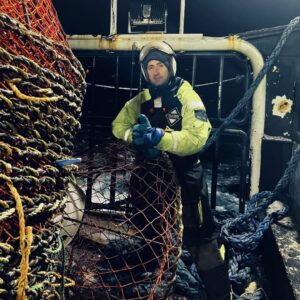
On the vessel, I worked both in the factory, manually processing up to 4-5 tons of crab per day, and on deck. The work is hard, some things I don't even want to remember.
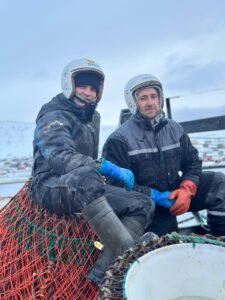
Everyone on the team must be united - team spirit is extremely important. You must listen to your superiors: the deck boss, factory boss, floorman, and captain. The team is divided into a factory part and a deck part, with an average of 20 people or more.
Life on the vessel is not easy: the sleeping quarters are not very comfortable, there's a lot of rocking, and sometimes it's hard to sleep. I lived two to a cabin. But the food is good - the cook prepares tasty dishes, including meat, fruits, and vegetables.
The most difficult thing about working at sea was the constant rocking, the cold, and being far from my family. But I realized it was just temporary and I endured.
This job is very dangerous. Yes, I had to participate in situations involving risks to life or health. Heavy swaying, arm pain from overexertion, bandages, and painkillers - all these became commonplace. No one gives you sick leave.
Yes, I also had seasickness, but I didn't take pills - I kept working. I was saved by the thought that it was only temporary.
 Work schedule and finances
A regular workday is 12 hours, with two 6-hour blocks. A trip lasts about 35 days.
Income ranges from 5-6 thousand to 20 thousand euros, and on other vessels, it can be even higher. It all depends on the catch, prices, the size of the crabs, and other factors. I intend to work at sea as long as possible because the money is motivating.
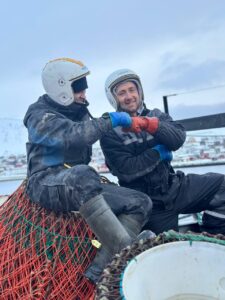 Personal experiences and development
When I started working on the vessel, the emotions were overwhelming. I love fishing and the sea, but now I realize it's not about romance, it's about hard work.
The first shoot was a memorable moment. It was difficult to get used to such a pace and volume of work.
Career growth is possible if you work well and show leadership qualities. I want to advance, earn, and invest money.
Family and friends' support is very important. When I return from a trip, I try to spend as much time as possible with my family and children.
Yes, I plan to continue working abroad because the money is motivating. My plans for the future are to earn as much as possible and invest.
I would like to especially thank Alexei. He helped me obtain an STCW certificate remotely, helped me schedule an appointment with an accredited doctor for the medical commission, connected me with employers, provided me with court contacts, possible job vacancies, prepared me for interviews, prepared my CV, and motivated me. Thanks to his support, I managed to get a job. Now I have started my own employment project in Sweden and Norway. I am very grateful to him.
Next steps
Everything you need to know to get on a fishing vessel: documents, CV, interview, and employer contacts.
We prepare your CV in English and Norwegian, in the format required by employers in the fishing fleet.
List of fishing companies in Norway, Denmark, Ireland, and the UK, with direct contact details.

Your gateway to sea fishing employment opportunities.
Thank you for subscribing! You will receive the latest news from the maritime industry.
Do you have questions about employment in the maritime industry? Schedule a one-on-one consultation (30 min) and receive personalized answers.


