Articles
Articles
 Then, by chance, I saw a video about the working conditions and opportunities on crab fishing vessels in Norway. I was intrigued and, to be honest, a little scared: the sea is not just another country, but a completely different world. However, the thought of financial opportunities and a new life was stronger than my fears.
First Steps: Courses and Medical Training
To get a job on a vessel, you had to take special maritime courses, which included water safety and first aid. A medical commission to check physical and psychological condition was also mandatory.
The training proved to be challenging: I managed 10 days, almost without rest and breaks.
The courses were interesting and informative, with many terms unfamiliar to me. After completing them, I felt stronger and more confident.
Thus, after going through interviews and the selection process, I finally ended up on the vessel where my inaugural journey began.
First Voyage and Trials
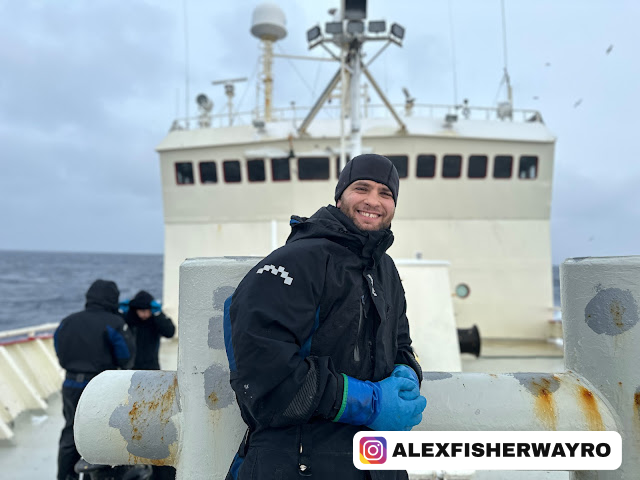
December 30 is the date I went to sea for the first time. The crab season is a harsh time: sub-zero temperatures, strong winds, and unusual swaying.
I started to get seasick, which I initially overcame. There were moments when it seemed like my strength was running out. But every time I woke up,
I went to the deck and fought with myself, because backing down means defeat, and I'm not the kind of person who gives up.
The work was hard and challenging. Before the crab season started, we had to repair the traps and prepare the equipment. When crab fishing began, I worked in the hold, stacking the catch and ensuring it was cooled. This is a difficult and responsible task: it's important to distribute the crabs correctly so as not to disrupt their cooling, as the cargo must be in perfect condition when landed.
Work Atmosphere and Mutual Assistance
A vessel is a confined space where people from different cultures and customs meet. It's very important for the crew to work as a team.
Let me put it straight: conflicts are rare on our vessel. Everyone realizes that arguments can lead to problems and even dismissal.
At sea, we are all in equally challenging environments and understand how important mutual respect is.
I met people of different nationalities on the vessel. We mainly use English to communicate, but I am gradually learning Norwegian to better understand the language of the country where I work. Older colleagues tell stories about sea voyages, give advice about work and life at sea. These conversations are,
also, a kind of lesson that helps me cope with difficulties and keep my spirits high.
Life on the Vessel and Free Time
Offshore work seems non-stop, but we manage to find time for relaxation. The cabin is our little world, where we can relax, listen to music, read, or just call home. Internet on the vessel is limited, but communication with family is the most important support. In my moments of relaxation, I try to make time for the FisherWay project, which I set up to advise those who want to work on crab fishing or fishing vessels in Norway. This activity allows me to take my mind off other things and feel like I'm helping others.
Our meals are organized at a decent level: the vessel has a cook who tries to prepare a variety of dishes. There is meat, fish, and vegetables—in general, the food is balanced and keeps us strong. In addition, the company provides vitamins, which is important for maintaining health in such conditions.
Difficulties and Work Hazards
Working on a crab fishing vessel is not for the faint-hearted. Storms, slippery decks, heavy traps—all these require constant caution.
These moments make you think about safety and the need to follow all instructions.
Separation from family is not easy either.
Sometimes it feels like life is split into two parts: one on shore and one at sea.
For us sailors, the most important thing is not to forget why we do this.
My family is my greatest motivation, and when I remember them in difficult times, it helps me overcome all challenges.
Financial Capabilities and Future Plans
The main motivation for me, as for many other sailors, was the high earnings. The monthly income can reach up to 14,000 euros and sometimes more, depending on the catch and conditions. With this money, I have already managed to buy an apartment in Chișinău. This year my goal is to buy
a seaside property, possibly in Spain.
Working at sea has given me the financial stability I only dreamed of before. I intend to continue going on voyages and accumulate funds to start my own business. Maybe it will be something related to the sea, like training or services for sailors.
Advice for Beginners and Those Who Dream of the Sea
Working at sea is not just a job, it's a whole life, with its own rules and rhythm. If you plan to follow this path, I advise you to prepare physically and mentally, because you need to be ready for difficulties, stress, and a long separation from family. Perseverance and discipline are the main qualities for a sailor. And, of course, it's important to remember why you do it.
I have become stronger and more confident, I have learned skills that are valued worldwide. But most importantly, I found my calling, felt the freedom the sea gives, and gained meaning in every new day.
My story is still unfolding, and I am ready for new adventures and challenges. The sea has become a second home for me, and I am glad I took that step once—a step into the unknown that led me to a completely new life.
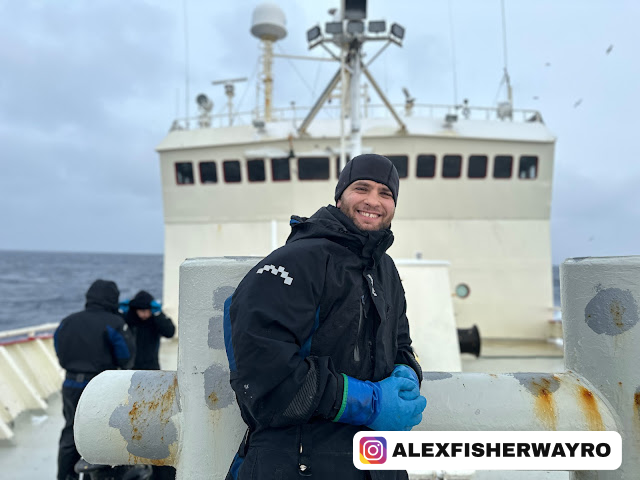
Then, by chance, I saw a video about the working conditions and opportunities on crab fishing vessels in Norway. I was intrigued and, to be honest, a little scared: the sea is not just another country, but a completely different world. However, the thought of financial opportunities and a new life was stronger than my fears.
First Steps: Courses and Medical Training
To get a job on a vessel, you had to take special maritime courses, which included water safety and first aid. A medical commission to check physical and psychological condition was also mandatory.
The training proved to be challenging: I managed 10 days, almost without rest and breaks.
The courses were interesting and informative, with many terms unfamiliar to me. After completing them, I felt stronger and more confident.
Thus, after going through interviews and the selection process, I finally ended up on the vessel where my inaugural journey began.
First Voyage and Trials
December 30 is the date I went to sea for the first time. The crab season is a harsh time: sub-zero temperatures, strong winds, and unusual swaying.
I started to get seasick, which I initially overcame. There were moments when it seemed like my strength was running out. But every time I woke up,
I went to the deck and fought with myself, because backing down means defeat, and I'm not the kind of person who gives up.
The work was hard and challenging. Before the crab season started, we had to repair the traps and prepare the equipment. When crab fishing began, I worked in the hold, stacking the catch and ensuring it was cooled. This is a difficult and responsible task: it's important to distribute the crabs correctly so as not to disrupt their cooling, as the cargo must be in perfect condition when landed.
Work Atmosphere and Mutual Assistance
A vessel is a confined space where people from different cultures and customs meet. It's very important for the crew to work as a team.
Let me put it straight: conflicts are rare on our vessel. Everyone realizes that arguments can lead to problems and even dismissal.
At sea, we are all in equally challenging environments and understand how important mutual respect is.
I met people of different nationalities on the vessel. We mainly use English to communicate, but I am gradually learning Norwegian to better understand the language of the country where I work. Older colleagues tell stories about sea voyages, give advice about work and life at sea. These conversations are,
also, a kind of lesson that helps me cope with difficulties and keep my spirits high.
Life on the Vessel and Free Time
Offshore work seems non-stop, but we manage to find time for relaxation. The cabin is our little world, where we can relax, listen to music, read, or just call home. Internet on the vessel is limited, but communication with family is the most important support. In my moments of relaxation, I try to make time for the FisherWay project, which I set up to advise those who want to work on crab fishing or fishing vessels in Norway. This activity allows me to take my mind off other things and feel like I'm helping others.
Our meals are organized at a decent level: the vessel has a cook who tries to prepare a variety of dishes. There is meat, fish, and vegetables—in general, the food is balanced and keeps us strong. In addition, the company provides vitamins, which is important for maintaining health in such conditions.
Difficulties and Work Hazards
Working on a crab fishing vessel is not for the faint-hearted. Storms, slippery decks, heavy traps—all these require constant caution.
These moments make you think about safety and the need to follow all instructions.
Separation from family is not easy either.
Sometimes it feels like life is split into two parts: one on shore and one at sea.
For us sailors, the most important thing is not to forget why we do this.
My family is my greatest motivation, and when I remember them in difficult times, it helps me overcome all challenges.
Financial Capabilities and Future Plans
The main motivation for me, as for many other sailors, was the high earnings. The monthly income can reach up to 14,000 euros and sometimes more, depending on the catch and conditions. With this money, I have already managed to buy an apartment in Chișinău. This year my goal is to buy
a seaside property, possibly in Spain.
Working at sea has given me the financial stability I only dreamed of before. I intend to continue going on voyages and accumulate funds to start my own business. Maybe it will be something related to the sea, like training or services for sailors.
Advice for Beginners and Those Who Dream of the Sea
Working at sea is not just a job, it's a whole life, with its own rules and rhythm. If you plan to follow this path, I advise you to prepare physically and mentally, because you need to be ready for difficulties, stress, and a long separation from family. Perseverance and discipline are the main qualities for a sailor. And, of course, it's important to remember why you do it.
I have become stronger and more confident, I have learned skills that are valued worldwide. But most importantly, I found my calling, felt the freedom the sea gives, and gained meaning in every new day.
My story is still unfolding, and I am ready for new adventures and challenges. The sea has become a second home for me, and I am glad I took that step once—a step into the unknown that led me to a completely new life.
 Free lesson!
Next steps
Everything you need to know to get on a fishing vessel: documents, CV, interview, and employer contacts.
We prepare your CV in English and Norwegian, in the format required by employers in the fishing fleet.
List of fishing companies in Norway, Denmark, Ireland, and the UK, with direct contact details.

Your gateway to sea fishing employment opportunities.
Thank you for subscribing! You will receive the latest news from the maritime industry.
Do you have questions about employment in the maritime industry? Schedule a one-on-one consultation (30 min) and receive personalized answers.


